This Content is written by Human, not AI robot. Learn More
Everyone who owns an RV will ask the same thing after drinking an unappetizing glass of water or filling up a tank with cloudy water: is it healthy? The water quality of the campground and public hookups differs greatly from one location to another, and the right RV water filter is the most effective solution to not worry about the water.
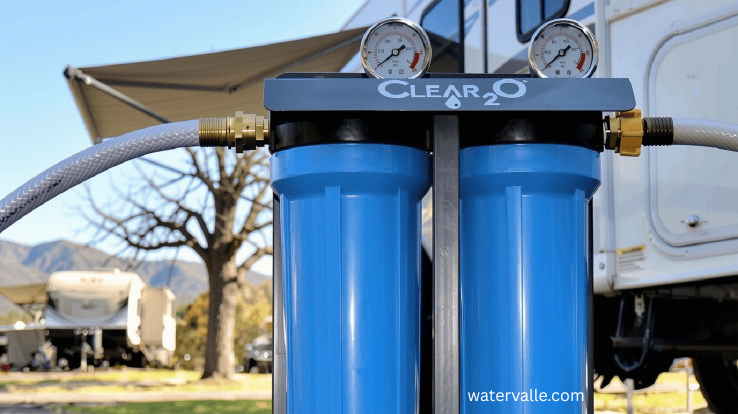
Certain campgrounds are reliant on treated municipal lines, which have a similarity to the drinking water from your home. Some resorts rely on private wells, which each campground is responsible for testing and ensuring the water quality may fluctuate according to the season, conditions, and the extent to which the infrastructure is kept in good condition. Public water that is regulated could be affected by contamination from cracks and aging infrastructure between the source and your bib. An RV water filter sits just at the point of connection and provides constant shielding regardless of the location you are parked.
What an RV Water Filter Actually Does
The RV water filter can be placed at the water supply inlet, at the threaded connections that connect your hose to provide water to the tank, or directly on the spigot itself. When water flows through the RV water filter, it is treated in stages, beginning with physical sediment removal and finally the chemical process of adsorption, or media-based treatment to remove chlorine taste and smell.
A majority of RV Water filters utilize either or both of these technologies as the core technology:
- GAC is one of the Granular Activated Carbon (GAC) that absorbs chloramine, chlorine, as well as volatile organic compounds. This is the primary reason why filtered drinking water tastes more appealing.
- KDF media (Kinetic Degradation Fluxion): a copper-zinc alloy that breaks down chlorine by a reaction called a Redox and assists in preventing the growth of bacteria within the housing of the filter, which is crucial for filters that are not being used in storage.
Together, these steps tackle the two main problems RVers face with regards to water at campgrounds such as bad taste and obvious dirt.
Why This Matters More Than It Seems
The risks to health present themselves, and that’s why many RVers feel wrong impressions of security. The typical sediment-and-carbon water filter was not made to get rid of viruses, bacteria, and cysts, such as cryptosporidium and giardia. It can catch more large particles, provided it has an extremely fine micron count and isn’t purifying.
This is a frequent theme throughout RVer discussions. The people who utilized a basic filter to bathe and thought it was safe to clean their teeth have been suffering from water-borne disease for weeks afterwards. Some people don’t bother with filtration at all and carry bottles of water, purely because they aren’t sure the water that comes out of the spigot they’re not familiar with.
Both responses point to the same problem: most people aren’t aware of which line is “filtered” and “purified.” Filters improve flavor and minimize sediment as well as exposure to chemicals. It is only a system that has an under-micron stage, a reverse osmosis membrane, and UV treatment that can effectively eliminate microbiological hazards.
Who Actually Needs One
If you drink out of the tap, cook using it, or even fill up the ice tray from your RV’s water supply, filtration isn’t a choice but an essential security. It doesn’t matter if you stay in your RV every two weekends or stay in your RV all the time.
It is reasonable to deprioritize filtering solely if you utilize bottled water to drink or for cooking. Also, you should utilize the tap to wash or flush. Despite the fact that many homeowners are capable of adding a sediment stage that protects the plumbing of their faucets as well as their water heaters from accumulations of grit.
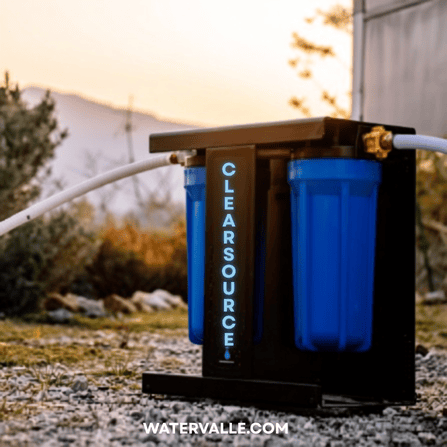
Full-time RVers as well as anyone who draws water from a wide variety of water sources — resorts for one month, bore wells in the countryside or boondocking spots on the other — are at most risk from the water’s quality being inconsistent and could get the most benefit from a solid system.
Types of RV Water Filters
Disposable RV Water filters inline connect directly to the hose. They are the most commonly used starting place. They’re affordable, do not require tools, and are easily repaired rather than replaced -ideal to use on trips of a few minutes.
Dual-stage systems for canisters can be mounted near the inlet of water and utilize disposable cartridges rather than the full-blown disposable units; this reduces the cost per gallon for individuals who frequently travel.
Multi-stage Whole-RV systems remove every gallon that enters the system, not only the tap in your kitchen. An average setup has three phases that include a sediment filter in the initial stage and a carbon block filter in the third stage to manage the taste and chlorine, as well as a finer carbon, or KDF, stage to handle heavier substances such as lead. This is the most common recommendation for those who travel full time.
Drinking RV water filters under the sink include a separate filtering stage that is finer for the tap in your kitchen with reverse osmosis, which is often used to ensure the purest water that is available in an RV-compatible size.
UV purifiers typically are added over filters already in place, but they’re not used in isolation. They’re the component that neutralizes the effects of viruses, bacteria, and cysts. This is crucial when filling from natural or unknown sources when boondocking.
Let’s see how the most popular types are compared:
| Filter Type | Removes Sediment | Removes Chlorine/Taste | Removes Bacteria/Cysts | Best For |
| Inline disposable | Yes | Yes | No | Occasional trips |
| Dual-stage canister | Yes | Yes | No | Frequent travelers |
| Whole-RV multi-stage | Yes | Yes | Limited (unless KDF-heavy) | Full-time RVers |
| Under-sink RO | Yes | Yes | Yes (drinking tap only) | Health-focused households |
| UV add-on | No | No | Yes | Boondockers, untested sources |
NSF/ANSI Certifications, Explained Simply
The product listings spout off certification numbers, but don’t explain the meaning behind them, so we’ll give you the quick version:
- The NSF/ANSI 42 is a cover for aesthetic effects such as chlorine smell, taste, as well as appearance. It is the standard that all inline filtering systems meet.
- The NSF/ANSI53 standard is a health risk assessment -such as cysts, lead, and volatile organic substances. RV Water Filters that are certified to this standard do more than make water taste more appealing.
- NSF/ANSI372 ensures that the housing of the filter is free of lead.
In the event that you’re comparing the RV water filter against another one, make sure you know which one of the three is authentically certified to inform you more than what’s written on the packaging.
How to Choose the Right RV Water Filter
The RV Water filter should be matched to the way you travel in reality, not just to the top online reviews:
- Camper on the weekend or occasionally: a basic inline disposable filter that is replaced every season. It covers the flavor and sediment with a minimum cost.
- Monthly traveler: A dual-stage cartridge system weighs the cost of initial purchase against savings on cartridges.
- Full-time RVer: A multi-stage RV water filter system, best with a solid KDF component. It protects the water you drink, appliances , and plumbing.
- Homes that are sensitive to health: pair a whole-RV water filter system with a reverse osmosis under-sink filter specifically for drinking water.
- Boondockers taking their information from unconfirmed or natural Sources: add a UV stage. This is the only group in which not doing it can pose serious risks.
Two simple questions help you address this issue:
How frequently do you drink from a bottle from an unknown source, and does your family drink directly from a tap? Most often, you can answer both of these questions with “yes,” the higher the filtration level you require.
Installation and Winterizing Of RV Water Filter
The installation of an RV water filter can be done in about five minutes. Clean a new hose for approximately 30 seconds prior to connecting the RV Water filter in order to remove the manufacturing residue. Connect the filter between the water spigot and the hose by following the flow direction arrow in the housing. The water should be turned on slowly, and check each fitting for leaks, then let the faucet run for about a minute prior to drinking, in order to remove carbon particles and the initial air.
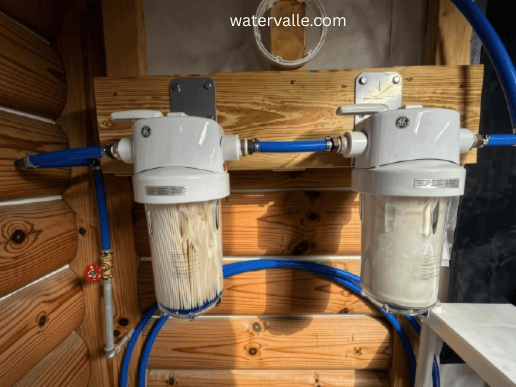
The process of winterizing can cause a large number of RVers to drop an RV water filter and not realize what caused it. Cartridge media can be damaged due to the effects of freezing. Therefore, RV Water filters must be taken out or removed prior to winterizing the unit with antifreeze. Then, replace it with a brand new one when the time comes to start again. RV Water Filters left in the compartment during the hard freeze can break or cease to function, even though it appears to be fine from the outside.
Maintenance Schedule Of RV Water Filter
- RV Water Filters that are disposable inline: Replace every 2- 3 months, or approximately 1500 gallons.
- Dual-stage cartridges are replaced each 3-6 months. Replace sooner in the event that flow drops significantly.
- Whole-RV multi-stage systems replace each stage after 6-12 months, based on the amount of water used and its quality.
- RO systems under sink: Replace every 6-12 months, and with filters that are swapped out more frequently.
Dropping flow rates or the recurrence of chlorine smell is typically the best indicator that a cartridge is being used, no matter what the date.
Regional Water Quality
The hardness of water and the type of source change based on the location you’re going to. Desert areas like Arizona and Nevada are more likely to have high mineral levels, and that’s why most full-timers based in these areas use the softener and filter instead of relying on filtering on its own. Texas, as well as Florida, each have a distinct area with older infrastructure, as well as more chlorine that carbon-forward filters can manage very well. For states such as Wisconsin, camping areas that are located in rural areas tend to be more prone to operate with private wells. This increases the importance of the solid carbon and sediment stage in short-term stays.
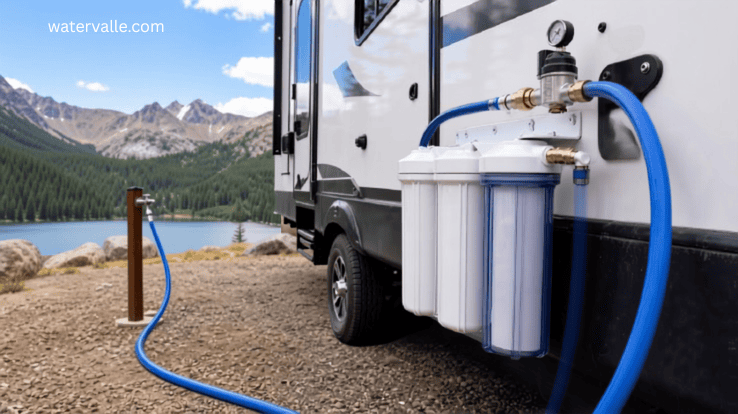
This doesn’t mean it is necessary to have a separate filter for each state. A multi-stage whole-RV system that has a robust KDF as well as a carbon-based core can handle most conditions in each of these areas and does not require swapping out for trips to local areas.
Alternatives Worth Knowing About
Water softeners focus on mineral hardness, not the presence of contaminants. They are usually used in conjunction with an RV water filter rather than as a substitute for one. Reverse Osmosis systems provide the best quality, but they are typically put under the sink to supply drinking water, as they’re less efficient and use up some water in the process of filtration. Bottles of water can be a good alternative to drink, particularly when coupled with a simple sediment filter that protects fixtures, but it’s not scalable effectively for full-time or large households.
Common Mistakes RV Water Filter Owners Make
A good RV water filter can be subpar in the event that it’s set up or maintained improperly. There are a few errors that show up repeatedly:
- Doing the pre-filter hose flush. New hoses carry production residues, which are dragged through a new RV Water filter and will waste some of the capacity it has before even securing your water.
- Not paying attention to flow-rate evaluations. An RV Water filter rated at a lower gallons-per-minute flow could cause shower pressure to become a problem within a rig with two people. Systems that are used for multiple users should be certified to at least 3 GPM.
- Assuming “filtered” means “purified. “This is perhaps the most frequently repeated misconception regarding the use of RV water filters ; that’s why many campers suffer from illness despite following all they believed to be right.
- The freshwater tank is not being cleaned. A new cartridge isn’t able to clean a tank that has already been contaminated by buildup or bacterial growth over the course of time. Tank sanitizing is a distinct regular task, which filters don’t substitute for.
- Buy based on price by itself. The cheapest inline RV Water filter you can find has only an NSF/ANSI 42 rating for odor and taste, without any health-effects certification in any way. Fine for certain trips but not enough for others.
The importance of avoiding these pitfalls is greater than the specific model of RV water filter that you choose to purchase.
Pros and Cons by RV Water Filter Tier
There is no single RV water filter that is ideal for every person. It is therefore important to consider the pros and cons of each:
Inline disposable RV Water filters
- Benefits: low cost, no tools required, simple to switch between different trips.
- Pros: cheap, no tools needed, easy to swap between trips
- Cons: low capacity, no protection against microbiological hazards, needs regular replacement
Multi-stage Whole-RV Systems
- Pros: It protects the whole equipment — the tanks, water heaters and fixtures, not just the tap. Longer lifespan of cartridges; improved rate of flow
- Cons: more upfront costs and requires a mounting area; more complicated in winterizing routine
UV as well as reverse Osmosis Add-ons
Cost: Very low, and there is no need for equipment.It’s also very easy to swap between various activities.
Pros: the only tiers that reliably address bacteria, viruses, and cysts.
Cons: limited capacity, insufficient protection against microbiological dangers, and requires regular replacement.
This information is gathered from different surveys, medical tests, and tech giants like Google, TechRadar, and more. Our top priority is to provide you with valuable information.
For More Details About Different Water Appliances, Click Here
Most frequently Answered Questions:
1.Is there a need for an air purifier in my car?
Yes, in nearly every instance. The water quality of public and campground hookups can be different enough that a water filter for RVs is among the most affordable options to ensure the health of your family and your RV’s plumbing.
2. Does an RV water purifier eliminate bacteria and Giardia?
A sediment-and-carbon standard filter can’t eliminate the presence of viruses, such as bacteria, cysts, or Giardia. In order to protect yourself from such a risk, it is essential to include a UV device such as a sub-micron filter that has been rated to minimize cysts, and a reverse osmosis device.
3. What is the length of time the RV’s water filter can be used for?
Disposable inline filters generally last for 2-3 months, which is about 1500 Gallons. Multi-stage filters for whole-RVs typically run for 6-12 months, based on the use and quality of water.
4. Do I have to drink drinking water from the RV tap when I’ve got a filter in place?
With a properly maintained and certified RV water filter as well as ongoing sanitization of the freshwater tank, it is acceptable to drink. Some owners have the under-sink level for additional peace of mind.
5. What is the distinction between NSF/ANSI42 and 53?
NSF/ANSI 42 covers aesthetic changes like taste, the reduction of chlorine, and odor. The NSF/ANSI 53 program covers health-related pollutants like cysts and lead. It’s a better bar than taste.
6. What is a softener for water similar to an RV filter?
No. Softeners are used to treat the hardness of minerals via the exchange of ions. But they are made to get rid of toxins like sediment and chlorine. Most people living in areas that are hard-water prone use both.
7. What happens if I put my water tank in the RV during the winter months?
Freezing temperatures can damage the housing and the inside of the media. The filter should be taken off or tucked away before winterizing. They should then be changed with a new cartridge at the beginning of the following season.
8. What does an RV water filter set?
Basic inline filters usually cost $15 to $35 and will need to be replaced every two months. Multi-stage systems for the whole RV cost more initially, usually $150-$400, and annual costs for cartridges are in the $60-$150 price range.
Conclusion
A good RV water filter boils down to aligning the system with the way you travel as well as the quantity of water you get directly from the faucet. For weekend campers, you can go with a simple inline filter, whereas full-timers and those filling up with unpredictable sources should consider an array of stages, or boondockers utilizing natural water ought to add ultraviolet protection in addition. Whichever tier you choose, be sure to keep track of the schedule for replacement and remove your filter before you winterize -it’s a simple way to prevent more cartridges from failing as well as other issues.