This Content is written by Human, not AI robot. Learn More
If you’ve ever dumped the fresh salt bag in your brine tank but still left with sloppy dishes and stiff towels, you are aware that using water softener salts isn’t as easy as “just top it off.” The water softener salt you buy and the quantity you consume, as well as the way you manage your tank, are all factors that determine whether the salt softens or not.
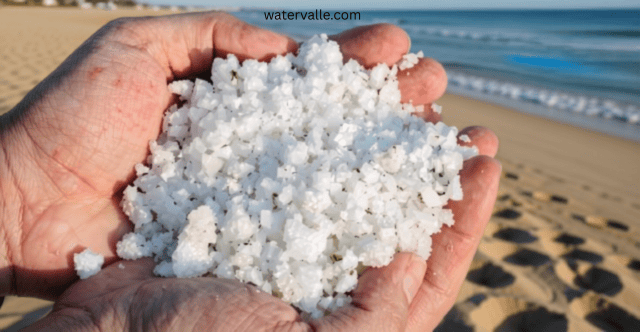
This article explains what water softener salt is in real terms, what the differences are between different water softener salts available, how much you will need, and the mistakes that can prevent a softener from functioning while running the normal cycle.
What Water Softener Salt Actually Does
Water softener salt doesn’t treat your water directly. Instead, it makes the brine solution that your softener uses to recharge it. Within the unit, the resin beads pull magnesium and calcium (the mineral that causes the hardness of water) and exchange them with sodium ions via a procedure known as Ion Exchange.
As time passes, the resin beads will fill up with hard mineral deposits and cease functioning. This is where salt for water softening is used: in regeneration, a concentrated brine solution that is made of the water softener salt that is in the tank is flushed into the resin bed, taking off the minerals that have been accumulated and flushing them down the drain. The resin emerges fully charged and is ready to start softening water.
In the absence of salt for water softening, sitting in a usable state inside the brine tank, the cycle isn’t possible. It will continue to run regularly, lights will flash, and the water will continue to flow, yet none is actually softened.
Why Water Softener Salt Matters More Than People Expect
Many homeowners believe that a softener “just works” once it’s put in place. However, the entire system is dependent on a constant, uninterrupted supply of dissolved sodium for water softeners’ salt. Don’t refill it, let the tank empty, or choose a product that isn’t right, as hardness signs come back: scale on faucets, dull washing soap, soap that isn’t able to lather in the shower, slow accumulation in pipes and other appliances.
It is the same reason why water softener salt quality is so different in real-world performance. The cheapest bag that has a high insoluble content could leave a layer of accumulation of sediment at the bottom of the tank; however, a more pure product is dissolved in a clean manner and leaves the brine tank far easier to clean.
Water Softener Salt Types Compared
There are four forms of water softener salt used to soften the water. Each is different once within the brine tank.
The rock salt is extracted directly by digging up underground deposits. It’s the least refined of the options, typically 90 to 99 percent sodium chloride, with the remainder made of insoluble minerals, which are deposited at the bottom of the tank. This is usually the least expensive alternative; however, it requires regular tank cleaning.
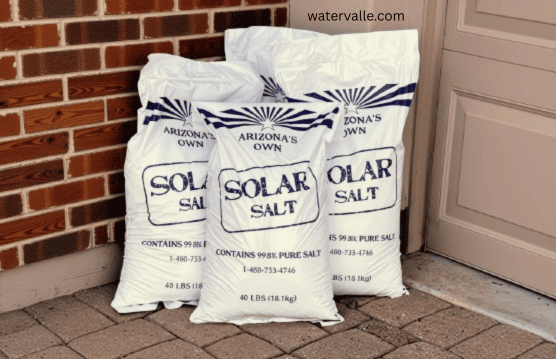
Salt from the sun is made by the process of evaporating the seawater in large open ponds. It is available in crystals or pellets. It dissolves more uniformly than rock salt and has a 99.6% to 100% quality. For many households, moderately hard solar salt is an appropriate balance between cost and quality.
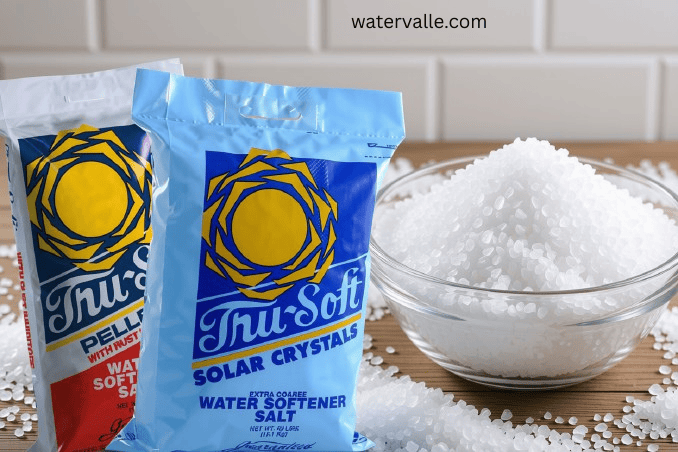
Evaporated salt, sometimes labeled as pellet or cube salt, goes through a mining-and-evaporation refinement process that pushes purity above 99.99%. It’s most effective at dissolving the material, leaving the smallest amount of residual, and it is the type that many softener makers recommend by default. Potassium chloride isn’t the sodium-based salt that it is in any manner. It’s the most common replacement for homes that manage the intake of sodium, but while it functions with the same ion-exchange system, it is significantly more expensive and typically requires various dosages compared to sodium-based salt.
| Salt Type | Purity | Dissolves | Best Fit |
| Rock Salt | ~90–99% | Slower, more residue | Budget-conscious households |
| Solar Salt | ~99.6% | Moderate | Moderate hardness, general use |
| Evaporated Salt | ~99.99% | Fast, minimal residue | Most residential softeners |
| Potassium Chloride | High | Moderate | Sodium-restricted households |
How Much Water Softener Salt You Actually Need
Consumption is based on the water’s hardness (measured in grains per gallon or GPG) as well as the consumption of your household’s water and the amount of time your system regenerates.
In general:
- A majority of homes use around 8 to 40-pound bags of water softener salt every year.
- Keep the brine tank filled by filling it with water until at least one-third or two-thirds of the total. Overfilling hinders the ability to detect earlier signs of problems.
- Do not let the water sit empty for any length of time, as this can lead directly to softened water.
Extremely hard water (21+ GPG), which is typical in a lot of areas with heavy mineral groundwater, may cause the use of 2 to three bags per month; however, water with a moderately high hardness (under 10 grams per gallon) could only require one bag per month, or two.
When and How to Add Water Softener Salt
Make sure to check the tank each month, at a minimum. In areas with high levels of hard water, testing at least every 2 to 3 weeks is an ideal practice until you are aware of your family’s usage patterns.
Refill correctly:
- The brine tank should be opened and the water softener salt levels checked.
- Scrape off any hardened crust lying on top of the tank prior to making the rest of the.
- Add the water softener salt gradually, instead of dumping the salt in one heap against the tank’s wall.
- Be sure to keep your levels within the suggested limits. Do not exceed the recommended levels to fill your tank to the maximum capacity. Cover the lid tightly to block out the sun, rain, and any other dirt.
- It’s best to replenish the brine when the level is about a quarter rather than sitting and waiting for it to be dry.
The timing gap acts as an effective safeguard in the event of a process not using any brine at all and is therefore a loss of water; however, it does not resolve the problem of hardness.
The right choice of water softener Salt to suit your needs
Each household does not require the same kind of salt. Selecting the right salt for the particular setup could make all the difference in the maintenance process and also the performance.
- Newer or high-efficiency softeners: Manufacturers generally recommend evaporated pellet salts to ensure the most pure dissolution with minimal accumulation.
- Moderate hardness and customers with budgets: Solar salt pellets typically perform better than the more costly evaporated salt.
- Budgets tight, ready to do more cleaning: Rock salt is the least expensive option; however, tank cleaning is a regularly scheduled job.
- Households with sodium restrictions: Potassium chloride is the most common substitute, usually costing two to three times the amount per bag. Some bags may need adjustments to the dosing setting….. Make sure to consult your owner’s guide before making the switch.
- The content of iron is high in the water you drink: Be sure to look for water softener salts that are labelled for removal of iron and include ingredients that keep iron from contaminating the bed of resin.
Mistakes That Quietly Ruin Softener Performance
- Mixing different salts. It’s not harmful to change between rock salt and evaporated water softener salts; however, it increases the risk of dissolving differently.
- The tank is overfilled. A tank filled with water can hide earlier warning signs of buildup until the tank is unable to soften properly.
- Utilizing the wrong item totally. Table salt, ice-melt salt, and pool salt aren’t substitutes for water softener salt……These contain substances that may result in damage or blockage of the device.
- Allow the tank to run out of water. No salt means there is no brine. Also, no brine is a sign that the resin bed is never replenished.
- Do not ignore a hardened, swollen crust. A crust just beneath the surface may hold water beneath it, regardless of whether the tank appears at a full top. This is a sign of the beginning of a larger issue.
Salt Bridges and Salt Mushing: Two Different Problems
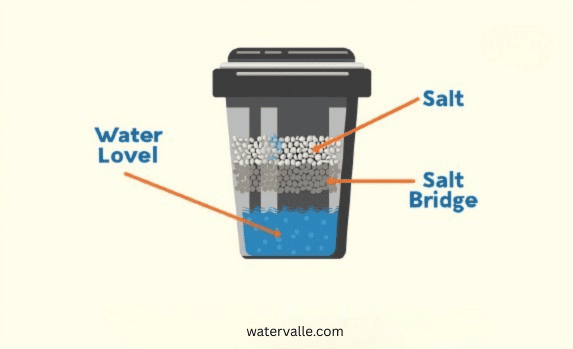
Salt Bridging is when a solid crust is formed over the waterline in the tank. This creates gaps between dry salt and the liquid beneath. The softener is drawn out underneath the bridge. The brine solution becomes less flexible or totally disappears as the tank appears to be full of water softener salt. Variations in temperature and variations in humidity may cause this problem.
Repair: Be sure to cut the crust off with the broom or other similar tool. Then, think about keeping the level of fill moving forward to stop the crust from resurfacing.
Salt mushing is an entirely different problem. The fine particles get clumped into the form of a thick, sludgey mass on the base of the tank, hampering any brine valve. This happens more frequently in the case of less pure rocks or solar salts in hot climates.
Correction: This usually calls for a complete tank cleaning by draining it and removing the sludge, then switching to a more pure water softener salt kind afterward, to lessen the likelihood of it happening again.
Storing Water Softener Salt Properly
What you put in your bags to store them is as important as the items you purchase. Moisture is the main enemy -garage floors that are damp or a leaky roof, or even the seasonal fluctuations in humidity, will turn an excellent bag into a solid non-useable brick long before it gets to the brine tanks.
Certain habits can be a big help:
- Keep bags away from the concrete floor.
- Set them up on a wooden pallet or shelf, as concrete can absorb and release water. Store the packaging in a dry, secure area and out of direct sunlight, which could cause deterioration of certain packaging over time.
- Seal the bags tightly instead of allowing them to become airborne.
- Do not stack bags that are too high, as the weight could compact and crush the lower bags even with no moisture.
A few bags of food in advance can be a sensible option to make sure you’re not running out. However, purchasing a whole year’s worth of supplies all in one go is only sensible if you’ve got an unattractive place to store it. In other words, you’ll trade one issue of maintenance for an additional one.
Signs You’re Using the Wrong Product
Sometimes, the problem isn’t due to an issue with the softener itself. It’s just using the wrong salt in the configuration. There are a few indicators that suggest this is the case:
- The presence of excess residue at the base of the tank within a couple of refills generally indicates an inferior product that has more insoluble material than the tank can handle.
- The frequent bridging even when you adjust fill levels may be traced back to a crystal’s shape or size that’s more susceptible to crusting depending on the climate in which you live.
- Hardness readings that persist regardless of refills regularly indicate that the settings for dosing in your tank were set in a different way of dosing than the one currently inside the tank. This is particularly true when changing to potassium chloride.
- The smell or color of the brine tank may indicate that it contains high levels of impure substances that don’t normally occur. It is recommended to contact the retailer or manufacturer.
If the same issues are evident repeatedly they’re usually cheaper at the end of the day to change items rather than sustaining the same procedure each month.
What Water Softener Salt Costs Over a Year
The price of water softener salt varies based on type and purity.
| Salt Type | Typical Price per 40 lb Bag |
| Rock Salt | $5–$8 |
| Solar Salt | $7–$10 |
| Evaporated Pellet Salt | $9–$14 |
| Potassium Chloride | $20–$30 |
With an average of around 8- 12 bags per year, the majority of families spend 60 to $150 annually on salt, based on sodium and potassium chloride, which is significantly more. The bulk purchase from an online store or a home improvement shop typically brings the cost per bag lower.
Salt-Based Softeners as compared to Salt-Free Systems
It’s important to note that not every softening device that is available makes use of the water softener salt at all. Salt-free conditioners use an entirely different method, which is usually templates-assisted crystallization that alters how minerals of hardness operate, but without actually taking them out.
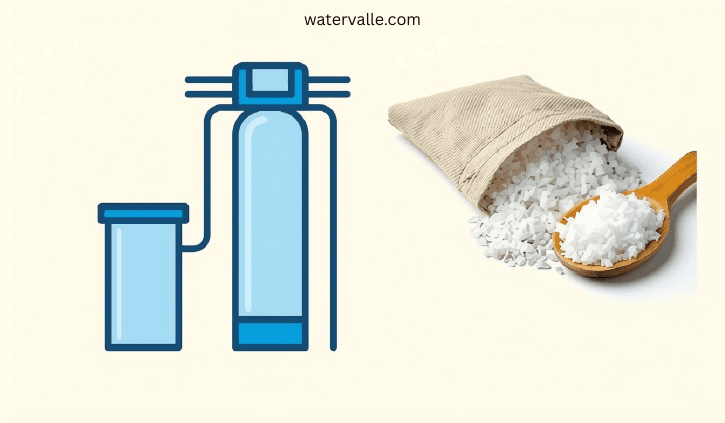
Salt-based systems, like the ones that this article focuses on, are the only ones that actually strip the hardness minerals out of your water via Ion exchange. If decreasing measured hardness is the goal you are after, then a softener made of water softener salt, using salt for water softening, is your most feasible solution. The main focus of salt-free systems is removing the build-up of scale instead of the hardness of the water.
A Quick Real-World Scenario
Imagine a home located in a water hardness zone that put in a softener a couple of years ago, but hasn’t even thought about brine tanks ever since. The dishes start to appear unevenly, shower heads develop an oily coating, and laundry is stiffer than it was previously, and yet the display shows the normal cycle that is running according to schedule.
A glance at the tank will reveal the issue quickly: a thick caked layer that is about 1 inch over the waterline, and the actual brine sitting in a useless way beneath the crust. The system has drawn in a weak brine or none at all for a few weeks and has been unable to replenish the resin bed, while it appears to be functioning as normal.
By breaking the crust up and lowering the level of fill moving forward, and then switching to a crystal with lower purity and a better-dissolving one, the issue is fixed immediately and stops the problem from occurring as frequently. In a few days or weeks of the subsequent regeneration, symptoms of hardness diminish, and the home is returning to normal- an indication that the solution is not always concerned with the actual softener in question; it’s about the process within that tank you’ve never noticed.
These information are gathered from different surveys, medical tests and tech giants like google, Techradar and more. Our top priority is to provide you valuable information.
For More Details About Different Water Appliances, Click Here
Frequently Asked Questions
1.What if I used table salt in place of softening salt?
No. Table salt has iodine and anti-caking substances that aren’t intended specifically for softener systems. In fact, they can cause clogging of the system over time. Select salt made for softening water.
2. How often should I replenish my salt in my softener for water?
Check the tank every month at a minimum, and every 2 or 3 weeks for extremely difficult water zones, and ensure that the tank is at a level between one-third and two-thirds for water softener salt.
3. What happens when my softener has run out of water softener salt to soften water?
The resin bed won’t be able to regenerate; therefore, your water goes back to hard water, even though the system continues running its normal routine.
4. Is evaporated salt actually more effective than solar salt?
The water softener salt that is evaporated is more pure and dissolves more easily; that’s why it’s the best long-term option, even though solar salt can be an economical, solid alternative for moderate hardness.
5. What is the reason for that mushy sludge in the base of my tank?
This is known as salt mushing. It’s the accumulation of fine residue, usually from salt that is less pure, and humidity. Usually, it requires emptying the tank and then cleaning it.
6. Does salt for water softening expire or go bad?
It’s not expired in the conventional sense; however, it could take on moisture and form clumps in the wrong way, so store bags that aren’t opened at a dry, cool location.
7. Are there any options to switch between various types of salt for softening water?
Switching is okay. You should check your tank for buildup or bridges, as residue left from the previous salt can remain.
8. Does potassium chloride make a suitable alternative to regular water softener salt?
It functions using the same mechanism that is used in other salts and is suitable for households that manage sodium intake. However, it’s more costly and could need different dose options than the standard sodium-based salt.
Conclusion
The water softener salt may appear like a package of pellets; however, the kind you select and the frequency with which you keep the brine tank will determine if your softener is performing as it’s meant to. The evaporated water softener salt option is the best choice for most homes; solar salt offers a decent alternative, while potassium chloride is a perfect solution for those who are concerned about sodium. Inspect your tank on a regular basis and look for signs of bridging or mushing. Also, make sure you match the water softener salt to the specs of the unit as well as your water’s actual hardness. The softener can handle the rest.