This Content is written by Human, not AI robot. Learn More
Tankless water heaters cost from $1,000 to $3500 to make a straightforward swap, while $3000-$6,500 is for an entire tank-to-tankless conversion, which requires replacement of venting lines, gas lines, or electrical wiring. The tankless water heater installation process typically takes between 3 and 5 hours, depending on the size. Gas heaters usually require an installer who is licensed to ensure that they meet the requirements of code. This is the short version. The more extensive and useful variant is that two homeowners could purchase identical tankless units and get entirely different outcomes because tankless water heater installation, rather than the device itself, is the one that determines how well the unit actually functions.
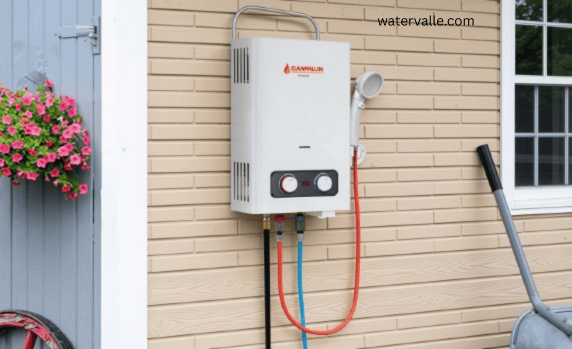
A majority of the concerns people ask in the tankless water heater installation task aren’t concerned with the equipment. They’re focused on what happens to the walls and gas lines as well as the breaker panel and even the plumbing beneath it, since this is where the true expense and difficulty reside in tankless water heater installation.
Why Installation Matters More Than the Unit You Buy
Tankless water heaters are built to give a particular flow rate, expressed in gallons per minute (GPM) and at an appropriate temperature increase. The heater can only reach this number if it’s consuming enough power or fuel for it to reach that number.
The majority of complaints about performance (lukewarm or cold water, output which drops when two appliances are running simultaneously, or an appliance that appears “too small”) are due to an insufficient gas line and not to an issue with the appliance. It is depriving itself of the BTU supply it requires, which is why it throttles itself. This one point is the most important reason for in-person tankless frustration than any comparison of spec sheets ever could.
Electric units share the same problem with a slightly different approach: an insufficient circuit or panel capacity limits the output of an electric unit regardless of what the design or label claims it can do. So, tankless water heater installation really matters.
What Tankless Water Heater Installation Actually Involves ?
Things that are involved in a tankless water heater when it comes to gas units are typically:
- Calculating load — fitting the device to meet your home’s highest simultaneous demand for hot water as well as your local groundwater temperature (colder the water that is incoming requires an increase in temperature and requires greater BTU to be pumped into the unit).
- Remove the older unit: draining and disconnecting the current tank or tankless unit.
- Gas line evaluation by assessing whether the line in place can meet the unit’s total BTU demand while taking into account the other gas appliances using the same line. This is a step that’s often left out or overlooked when budgeting quotes.
- Venting Installation: Gas tankless models require a dedicated venting system, whether Class III stainless steel or PVC/CPVC for efficient condensing models. Venting in the old tank style is nearly incompatible.
- Connecting water and mounting that include isolation valves for hot and cold lines are much more crucial than people think (more on this below).
- Leak and gas hookup test.
- Commissioning -running water through several fixtures to ensure that the flow and temperature are in line with specifications, as well as eliminating any startup error codes.
Electric installation is similar to a form, with the exception of ventilation and combustion air stages. However, there is an electrical evaluation. Many electric tankless models require a separate 240V electrical circuit, while older houses may require a modification to accommodate an electric tank.
Gas vs. Electric: What Each One Requires
| Requirement | Gas Tankless | Electric Tankless |
| Fuel/power supply | Gas line sized to unit BTU demand | Dedicated 240V circuit, sometimes multiple breakers |
| Venting | Required (Category III or PVC/CPVC) | Not required |
| Combustion air | Required for non-sealed units | Not applicable |
| Typical install time | 4–8 hours | 3–6 hours |
| Possible extra work | Gas line upsizing | Electrical panel upgrade |
| Best suited for | Whole-home use, colder climates, higher simultaneous demand | Smaller homes, mild climates, all-electric households |
Neither is universally “better” — it depends on what infrastructure your home already has and how much hot water you actually use at once.
What It Costs, By Scenario
| Scenario | Typical Cost Range (USD) |
| Like-for-like tankless replacement (gas) | $1,200–$2,500 |
| Like-for-like tankless replacement (electric) | $1,000–$2,200 |
| Tank-to-tankless conversion, gas (new venting/gas line) | $3,000–$6,500 |
| Tank-to-tankless conversion, electric (panel upgrade needed) | $2,800–$5,500 |
| Permits and inspection fees | $50–$300 |
They can be described as U.S. dollar ranges based on pricing trends for general contractors; however, actual expenses differ by region, country, and the local rate of labor. Find two or three estimates locally, rather than budgeting based on only one figure -for example, electrical and gas scope could differ considerably between homes with the same age, in the same neighborhood, for tankless water heater installation.
If you’re located outside of or within the U.S. — particularly in the UK, Ireland, or Australia it is possible that you will find this product under a different title. The installation of a combi boiler is an identical product but isn’t the same as A combi boiler. Usually, a combi boiler is able to heat domestic hot water and central heating with the same unit. A tankless water heater in the U.S. sense heats water only. If your house has an existing central heating boiler, “combi boiler” is more likely to be the correct term to describe what you’re paying for.
Permits, Codes, and Why Skipping Them Is a Real Risk
The majority of jurisdictions require permits for venting gas lines or electrical circuits that are altered, and this is the case for the vast majority of tankless modifications. Within the U.S., installers typically follow what is known as the International Fuel Gas Code (IFGC) for gas work and the National Electrical Code (NEC) for electrical installations, as well as the local plumbing codes that have been amended.
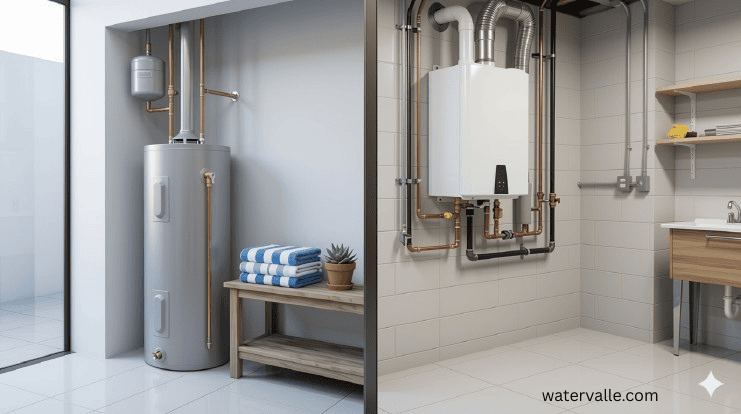
Not obtaining the permit isn’t enough to run the risk of a fine. It could also void the warranty of the manufacturer completely, as all warranties require that the tankless water heater installation be “in accordance with local code.” This can be an issue when reselling homes. Home inspectors regularly mark water heaters without a permit history, and buyers’ agents are alerted.
Sizing and Placement
The correct size of your home boils down to two figures that determine your house’s maximum simultaneous GPM demands (shower + dishwasher plus washing machine all running all at once, for example) and the increase in temperature necessary to get the water coming in at your desired output temperature. In colder climates, homes require larger BTU or kW in order to achieve the same temperature of output as homes that have warmer groundwater.
It is important to consider the location too. Gas engines require unobstructed combustion vents and air clearances. Electronic units can be more adaptable, but they still require adequate clearance to facilitate future maintenance, typically 12-18 inches in accordance with the manufacturer’s specifications.
Hard-water areas require additional considerations when determining the size. The build-up of mineral scale gradually decreases the unit’s flow rate with time. Some installers during tankless water heater installation suggest increasing the size slightly over the minimum or installing a scale-control filter in order to maintain steady performance during the descaling cycles. It is an issue to be discussed at the quotation stage, rather than once the unit has been set up, because retrofitting filters later on will result in a separate cost.
The cold-climate household faces the reverse issue: the temperature of groundwater fluctuates according to the season, so a system built for summer use will not perform as well during winter. An accurate load calculation takes into account the lowest expected cold temperature of the water, not an average. This is yet another reason that a standard online sizing calculator can be an ideal starting point, not an ultimate answer.
The Isolation Valve Detail Almost Nobody Asks About
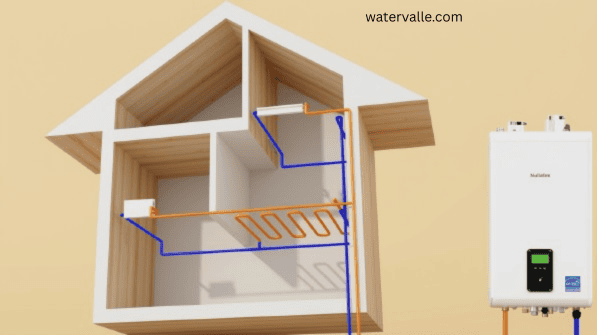
Isolation valves in both cold and hot lines aren’t a luxury. They’re the reason that makes future maintenance feasible without disconnection of the entire unit. If you live in areas that have hard water, tanks need periodic descaling to stop accumulation of minerals on the heat exchanger, which in turn reduces the efficiency of the unit and reduces the lifespan of the unit. If no isolation valves were fitted, the maintenance will be a substantially more expensive task. Inquire directly with the installer if they’re incorporating them in their plans. Some budget estimates don’t include them in order to reduce the cost of tankless water heater installation.
Common Tankless Water Heater Installation Mistakes
- A gas line that is too big is the most important reason for poor performance of a tankless system during tankless water heater installation.
- There are no isolation valves can turn routine maintenance into an expensive repair.
- Venting that is not properly or reused: Venting in tanks is often not suitable for use with tanks that are not.
- A permit not removed could result in warranties being denied and problems with resale.
- Affecting one fixture’s size instead of the real peak household demand can cause the temperature to drop as multiple fixtures operate at the same time. This is commonly referred to as the “cold sandwich effect.
DIY or Professional? A Straight Answer
In the case of gas-powered units, you must employ a certified plumber or gas fitter. A majority of jurisdictions mandate it through law. The danger profile (gas leaks or carbon monoxide and combustion venting) should not be taken to save on labor costs.
In the case of electric appliances, DIY is legally feasible if the local codes allow it, and your residence is already equipped with a wired circuit. However, permits are usually not required, regardless of the person doing the tankless water heater installation, and incorrectly installed wiring can ruin the warranty.
It’s a quick and easy method to verify a quote prior to signing it: Ask if the quote includes gas line sizing confirmation (or circuit capacity verification for electric), isolation valves, permit filing, as well as the post-install test of flow and temperature at various fixtures. If the quote doesn’t include any of these, inquire for clarification regarding these items; this is often the case that corners are cut.
How to Choose Someone to Handle Your Tankless Water Heater Installation
A different plumber installing tank water heaters will be equally confident with tankless water heater installation. Skills are similar, but they’re not the same, particularly on the venting and gas size aspects. There are a few things that separate the solid tankless water heater quote from one that could be risky.
- Find out how they’ll check the capacity of the gas line instead of just determining if that line “looks fine.” An inspection of the visual isn’t identical to the calculation of load.
- Check if the quotation comes with isolation valves by default or as an addition. This will tell you a lot about how well-organized the process of tankless water heater installation is.
- You should ask who has the permit for tankless water heater installation – you or they. If neither one of you intends to do so, it’s an indication that the tankless water heater installation is not something minor.
- Request their expertise, especially with tankless models, apart from the general experience with water heaters. Air requirements and ventilation are the areas where installers who have not had enough experience often fail during tankless water heater installation.
A tankless water heater estimate that is significantly less expensive than other quotes is well worth taking a second look at, but it’s usually lacking one of these measures instead of indicating genuine lower labor costs.
What a Realistic Timeline Looks Like
To complete a tankless water heater installation using the same fuel type and an existing gas line that is adequate or a circuit installation, technicians can finish the task within a single trip. Different conversions can be accomplished. When new venting needs to be routed through an outside wall, a gas line requires resizing, or an electrical panel requires an evaluation, the project could be divided into two phases: one for tankless water heater installation work and the other to complete installations and commissioning.
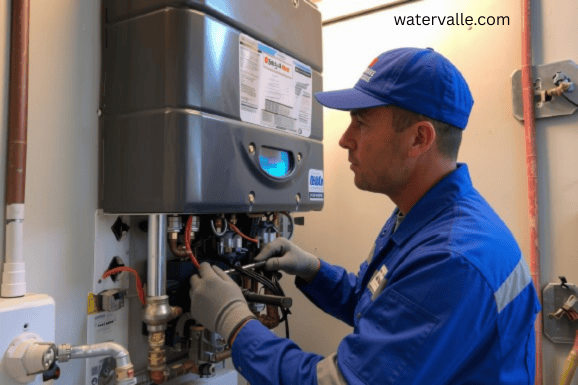
You should ask your technician directly if your circumstances are similar to a one-day task or one that requires multiple visits before you make a schedule; it could change the tankless water heater price by 1,000 dollars or more. And it’s best to find out before the project begins rather than be caught off guard mid-project.
Energy Efficiency and Payback Over Time
Tankless models are usually better than tank-style water heaters since they don’t maintain a huge amount of hot water throughout the day and are able to heat water only when the fixture needs it. This efficiency boost is reflected slowly on bills for utilities not immediately. How quickly they offset tankless water heater installation costs is dependent on your usage of hot water at home and the local price of fuel.
The household that has numerous showers, laundry, and dishwasher cycles every day can see the benefits of efficiency grow faster than one that has only occasional hot water usage. It is important to consider this prior to making assumptions about a rapid payback. An efficiency of the appliance (often stated as Uniform Energy Factor, or UEF) gives you a measure of effectiveness, but it does not tell you how fast it will reduce tankless water heater installation costs.
Condensing gas appliances have a greater UEF than other models. This is generally a reason for the higher price of units depending on the pattern of usage that is in line with. Electric units do not suffer any burning losses; however, their effectiveness is determined by the price of electricity in the area compared to gas pricing within the same market.
Nothing changes the fundamental tankless water heater installation calculations as described earlier in this tutorial. However, it can be a helpful element of information when you’re deciding between a simple swap and a better-quality unit on the same inspection -as the labor costs are typically the same in both cases and the difference in unit price is the place where the efficiency enhancement will be paid for.
After Tankless Water Heater Installation
Tanks require very little maintenance, typically a descaling flush every year and a water test, particularly in regions with hard water after tankless water heater installation. That’s why the decision to isolate the valve when it’s installed is in the same way it should be in the case of the 20 minutes required for a flush and an hour-long maintenance call for tankless water heater installation.
These information are gathered from different surveys, medical tests and tech giants like google, Techradar, and more. Our top priority is to provide you valuable information.
For More Details About Different Water Appliances Click Here
FAQs
- What’s the price of setting up a tankless water heater?
The typical range is $1,000 to $3500 for the same swap. A total change of $3000-$6,500 which involves replacing pipelines, gas venting, as well as electrical wiring.
2. Do I have the capability to put in the water heater tankless myself?
Possibly, for electric heaters where the local codes permit it, and the proper circuit is in place. The gas heaters need a licensed installation in the majority of places because of gas and venting regulations.
3. Do I need permission for tankless water heater installation?
In the majority of jurisdictions, there is a need for permits for tankless water heater installation, specifically in the event that gas lines, venting wires, and venting lines have been altered. The warranty may be invalidated and result in problems if you decide to provide your warranty in exchange for selling.
4. What is the estimated timeframe for this tankless water heater installation job?
The simple swap can take between 3 and 5 hours, typically for tankless water heater installation. A complete change that includes new venting lines, gas lines, or electric installation may take between six and 10 hours. It could require two visits.
5. What gas line does a tankless heater require?
It depends on the model’s BTU requirement, as well as the other gas appliances that share the line. This must be determined by a certified installer, not based on your previous tank’s line size.
6. Why isn’t my tankless heater being hot enough right after the installation?
The most common explanation is an inadequate gas line restricting BTU input in tankless water heater installation. This is not caused by an unreliable device. The incorrect sizing that your home requires for its high demand at the same time is the 2nd most frequently cited source.
7. Do you think a tankless heater is worth the effort to convert from a tank-based installation?
It depends on your household’s hot-water usage frequency, local fuel prices, and how much it will cost to convert the existing gas line or electric infrastructure. The price of installation is often the most important factor to consider, not the price of the unit.
8. What is the distinction between a tankless heater and one that is a combination boiler?
A combi boiler generally heats domestic hot water as well as central heating in one unit. It is common in the UK and Ireland. Tankless water heaters are used in the U.S.; they heat water only. If your house already has central heating, a “combi boiler” is most likely to be the better product for the price.
Conclusion
The system you purchase is much less than many people think. Tankless water heater Installation is what will determine if a tankless model is actually performing as its specification sheet claims. Before deciding on a contractor, check your house’s actual peak hot water usage, confirm that the electrical or gas circuit is able to support the brand new system, and make sure the isolation valves have been installed as included in the project for tankless water heater installation.
Don’t forget to get the required permit. Find more than one estimate as well as use the question below to determine which contractor has actually taken into account all the information that can determine whether the system will work over the next 15 to twenty years or is a frequent maintenance call.