This content is written by human, not ai robots. Learn More
If you’ve ever stood in the midst of a large array of options to choose between a bottle cooler or an elegant bottleless dispenser, you’re aware of the confusion that this type of product can cause. Water coolers and dispensers provide the same essential feature: clean, cool, easy water. However, they achieve this by different means, and which one is the “best” one depends entirely on your location, routine, as well as the level of maintenance you’re willing to commit to.
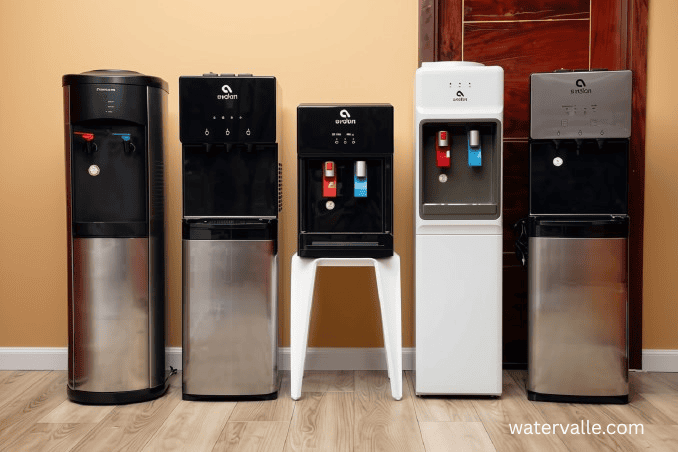
This article explains the essential aspects to consider in deciding between a water cooler and dispensers to use in your home. It will explain how they function, how much a water cooler and dispensers will cost in the long run, as well as how they can be kept in good condition and what areas often cause mistakes.
What Water Coolers and Dispensers Actually Are
Fundamentally, water coolers and dispensers are devices that hold and dispense drinking water at a predetermined temperature- cold, room temperature, or hot. A few rely on a replaceable bottle, while some connect directly to the home’s water line and then filter tap water when you need the system, which is often known as point-of-use (POU).
The difference between water coolers and Dispensers is more important than most people think. Bottled units require an area on the floor for storage of bottles as well as physical strength to move and flip the hefty container. A bottleless, plumbed dispenser requires access to water lines; however, it eliminates the need for bottle hauling completely. Both aren’t generally “better” — they address different issues.
Why the Right Choice Matters
The wrong kind of water cooler and dispensers will not only cost you money; it causes daily hassle. The bottle cooler that is installed within a small space without storage space becomes an issue. The bottleless dispenser that is installed with an adjacent water line can become an expensive plumbing venture. Making the right choice for Water Coolers and Dispensers in advance will save time and money.
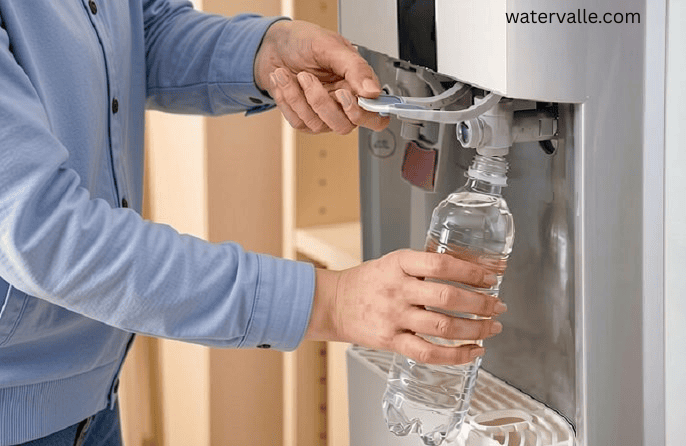
Also, there’s a health aspect that is often overlooked. Drip trays and reservoirs that haven’t been cleaned frequently are prone to mould and bacteria, which are among the most frequent — and a lot of avoidable issues with household water filtration systems.
Who Water Coolers and Dispensers Are For
They’re not just for offices anymore. Families, homeowners, renters who have young children, and everyone who is trying to limit the use of plastic bottles are the primary users of water coolers and Dispensers.
- Family members with children tend to place a high priority on child safety locks using the hot-water feature.
- Residents and tenants generally require options that don’t need permanent adjustments to the plumbing.
- Sustainability-minded buyers lean toward bottleless or filtered systems to reduce plastic waste.
- Any person who is unhappy with the drinking tap water’s taste would like to filter it without a complete under-sink overhaul.
Types of Water Coolers and Dispensers
Knowing the major categories of water coolers and dispensers helps make the other decisions more straightforward.
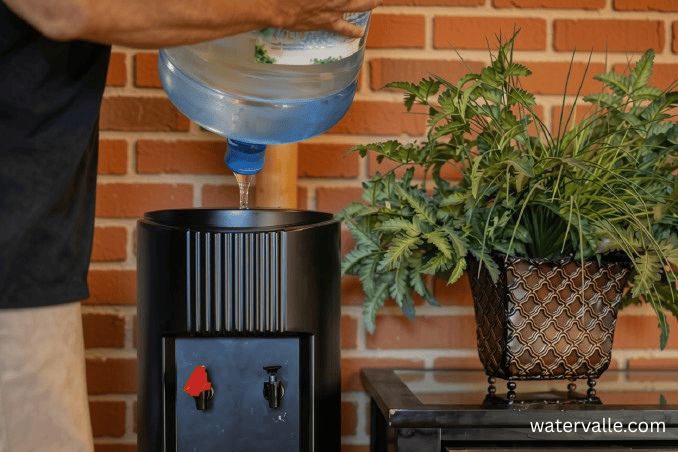
1. Bottled coolers for drinking water (top-load as well as bottom-load) This is a three5 or 8-gallon bottles for Water Coolers and Dispensers. Top-load units are more affordable and simpler, and bottom-load models hide the bottle inside a cabinet and are simpler to access since there’s no overhead lifting.
2. Bottleless (point-of-use) dispensers: They connect to cold water lines and purify tap water at the point of use — generally via carbon and sediment filtering and sometimes reverse osmosis. The bottles aren’t stored or exchanged, though installation does require access to plumbing.
3. Countertop dispensers are compact models that make use of smaller bottles or a direct line. This is not the actual flooring cabinet. Ideal for kitchens with small spaces for studios, apartments or RVs. They are often coupled with a conventional cold sink or dispenser.
4. Hot water instant dispensers that concentrate especially on delivering near-boiling drinking water to those who require it for tea, coffee, and cooking. They are often coupled with a conventional cold sink or dispenser.
5. Filters for under-sink and pitchers are not strictly water coolers; they are similar cousins that are worth noting. Pitcher filters are a low-cost and no-installation alternative; the under-sink system filters water right at the faucet without an additional device that takes up counter space.
| Type | Needs Plumbing? | Best For | Typical Price |
| Top-load bottled | No | Small homes, renters | $80–$200 + bottles |
| Bottom-load bottled | No | Families, easier lifting | $150–$400 + bottles |
| Bottleless dispenser | Yes | No-hassle daily use | $200–$1,200 |
| Countertop dispenser | Sometimes | Small kitchens, apartments | $60–$300 |
| Instant hot dispenser | Yes (usually) | Tea/coffee drinkers | $150–$500 |
How Water Coolers and Dispensers Work
Bottled units for Water Coolers and Dispensers depend on gravity or a tiny pump to transfer the water out of the bottle to the internal chambers, in which a compressor or a thermoelectric element is used to cool the water. Hot and cold combo units include heat on the warm side.

Bottleless dispensers draw water from taps through a multi-stage filter prior to it reaching the internal tanks. This stage decides the water’s quality; here, the unit will only be capable of delivering the quality its filter cartridge gives it.
The cooling method for water coolers and dispensers is also important. The compressor cooling process chills water more quickly and is able to handle more frequent usage; however, it’s louder and consumes more energy. Thermoelectric cooling is quieter and more compact and is suitable for home use, although it’s slow at bringing water to temperature.
Choosing Between Water Coolers and Dispensers for Your Home
A simple method for water coolers and dispensers to go through the following decision
- Do you have plumbing close to where you need to use it? If yes, the possibility of a dispenser that is bottle-less becomes feasible. If not, a water-based cooler would be the best option.
- Do you rent? Renters generally do better using countertop or bottled units that don’t require any permanently altered plumbing.
- How many users use water coolers and dispensers, and how many drink from them every day? One or two users rarely require anything more than the countertop or top-loading device. An active household of four or more people can benefit from a bottleless system with a greater capacity or a bottom-loading system.
- Are noise issues a factor? If the room is near an open-plan living space, then a thermoelectric or insulated compressor would be an ideal choice.
- Do you require hot water to drink coffee or tea? Confirm the model is specifically equipped with a hot-water faucet with a lock for children when children are present in the home.
Bottled vs. bottleless at a glance:
| Factor | Bottled | Bottleless |
| Upfront cost | Lower | Higher |
| Ongoing cost | Recurring bottle purchases | Filter replacement only |
| Plumbing needed | No | Yes |
| Storage space | Yes (for bottles) | No |
| Plastic waste | Higher, unless bottles are reused | Lower |
| Water source | Pre-filled, source-verified | Filtered tap water on demand |
The Real Cost of Water Coolers and Dispensers
The price of the sticker for a water cooler and dispensers is only part of the overall image. A countertop-based dispenser may be priced between $65 and $150, and a bottle-less dispenser with reverse osmosis filtering may be priced at $1,200. The ongoing cost of running the business will usually determine which will be more cost-effective for water coolers and dispensers in the long term.
- The cost of bottles of water is between $6 and $12 for a five-gallon bottle. The cost can rapidly increase in the case of a family that consumes 2 to 3 bottles each week.
- Filters designed to be used in conjunction with bottleless units: typically between $20 and $80 each, every 3 to 6 months, based on the filter stage.
- Electricity: a couple of dollars per month is enough to ensure that most compressors are running all the time.
If you have households that use two bottles each week, the price of water bottles is higher than the cost of an average bottleless dispenser, along with regular filter replacements for water coolers and dispensers. The calculation for a water cooler and dispensers should be important to do prior to deciding just on the price of the label.
Setting Up Water Coolers and Dispensers at Home — Including Apartments
The procedure for installing the bottle cooler is easy. Clean your reservoir as per the guidelines of the maker, then fill it up, plug it into the socket, and let it rest for about 2 hours prior to use.
Bottleless dispensers are more difficult to install. They typically connect via an O-ring valve, which is fitted into an existing cold pipe underneath the sink. This can be a simple option for apartment buildings that do not need permanent adjustments to the plumbing. Be sure to talk with an apartment owner first. But it can be easier than individuals believe.
After you’ve hooked up the filter for water coolers and dispensers, take a drink of the water flowing through the filter. Make sure that all fittings have been inspected for leaks. The unit should be placed on a suitable level, clear of direct sunlight, leaving a few inches to the rear of it for air to move around. Appliances like water coolers and dispensers positioned against walls that are subject to direct heat will experience rapid wear and tear.
Keeping Water Coolers and Dispensers Clean and Safe:
This is the portion for water coolers and dispensers that a majority of manuals leave out and is where the majority of complaints come from:
- Sanitize bottled cooler reservoirs every three to six months using a manufacturer-approved cleaning kit.
- Refills of the filter in bottles are recommended every three to six months or sooner in regions where the water is hard.
- Make sure to clean both the drip tray and the nozzles weekly. It’s the best way to prevent the development of mould.
- Keep an eye out for slower flows or changes in taste, as both are signs that your filter might require replacement.
A quick routine for a month’s worth of checklists for water coolers and dispensers can assist:
- Drip tray empty and washed
- Nozzles removed
- No visible mould in the area around the Spout
- Filter or bottle change on schedule
- There are no leaks in connections.
Safety Standards Worth Knowing
The filters used in the production of bottles are usually tested in accordance with Standard 42 from NSF/ANSI (aesthetic impacts such as flavour or smell) in addition to Standard 53 (health-related reduction of contaminants). The majority of reverse osmosis systems have NSF/ANSI certifications specifically. They provide a way to compare the performance of the filters against other brands instead of relying only on marketing claims.
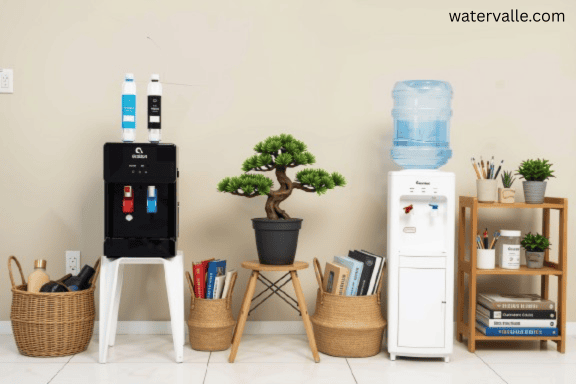
Safety in the use of electricity is equally important for water coolers and dispensers. Ensure that you have an electrical outlet with a grounded plug, and avoid using extension cords to connect compressors since they use a constant amount of power.
Common Mistakes People Make
- The purchase decision of a water cooler and dispensers is based on the capacity of the total head count and does not take into account peak demand, such as early morning or evening exercise.
- Not sanitising reservoirs since “the water looks clean.”
- Installation of a water cooler and dispensers within an area with no ventilation could reduce the service life of compressors.
- If we believe that the dispensers that use bottles are efficient, the number of stages to filter and the certification they receive are different for each model.
- I did not realize that the hot tap comes with a lock for children prior to buying a home in a home that has children.
Water Cooler And Dispensers: Other Filtration Choices
It’s worth considering water coolers and dispensers for simpler alternatives before taking the plunge:
- Filtering pitchers are the most affordable and require no installation. However, they’re less efficient and less large to accommodate busy families.
- Filtration systems designed for sinks under the counter provide filtered water directly from the faucet, without the need for an additional appliance that occupies counter space. It’s the ideal choice for those who don’t require an individual hot water faucet.
- Refrigerator-integrated dispensers combine filtration and cooling for households that already have a compatible fridge, though replacement filters can be pricier than standalone units.
They could be a substitute for an additional cooler for people who require a quick hot water faucet or more regular flow. However, you should consider them in comparison to the price and weight of a whole dispenser.
For More Information:
This information is gathered from different surveys, medical tests, and tech giants like Google, TechRadar, and more. Our top priority is to provide you with valuable information.
For More Details About Different Water Appliances, Click Here
FAQs For a Water Cooler And Dispensers
1.Are you more inclined to buy bottles or a non-bottle water cooler to use in your home?
Bottles are ideal for families looking to reduce their consumption of water and storage, in case plumbing is available. Bottles are great for those living in homes that aren’t connected to water pipes.
2. What’s the ideal frequency for filters to be changed on bottleless water dispensers?
Most makers recommend three to six months between replacements but harder water might need regular maintenance.
3. Have I the capability to set up a bottleless water dispenser inside the residence?
Often it is, if you connect the saddle valve on the cold water pipe that is already in place under the sink. However, it’s worthwhile to speak with your tenant before making any changes will be required.
4. Are water dispensers able to make use of tap water and bottles?
Bottleless units purify internal water by sedimentation, carbon or reverse osmosis process. Bottle coolers rely on the water contained in the bottle’s pre-filled state and not.
5. How come the water that flows out of my dispenser odor poor?
A dilution issue, a faulty filter replacement, or an unclean reservoir are common causes. Both of them are simple, affordable fixes.
6. What’s the price of operating a water cooler and dispensers in your house?
Expect to pay a couple of dollars for water coolers and dispensers per month for electricity, or normal costs for bottles (roughly $6-12 for a bottle) or periodic replacement charges ($20-$80 every few months) dependent on the water dispenser type.
7. Are countertop water dispensers useful in smaller spaces?
Yes, even for a small number of persons, they can provide all the amenities that are available in larger models but without an entire floor.
8. What is the length of time the bottles of water inside coolers last, if they’re sealed?
Sealed bottles can last for a long time in the absence of the sun’s rays and extreme temperatures. It is worthwhile to check the manufacturer’s instructions that are contained in the bottle.
Conclusion
The choice between water coolers and dispensers really comes down to three factors: if you have plumbing at your residence, how many customers will be using a water coolers and dispensers throughout the daily, and what amount of regular maintenance you’re satisfied with. Renters and smaller households typically choose a countertop or bottled model. Large households that have plumbing access will likely reap the maximum benefits of a model that is not bottled after the math equation of bottle distribution of water is solved.