This Content is written by Human, not AI robot. Learn More
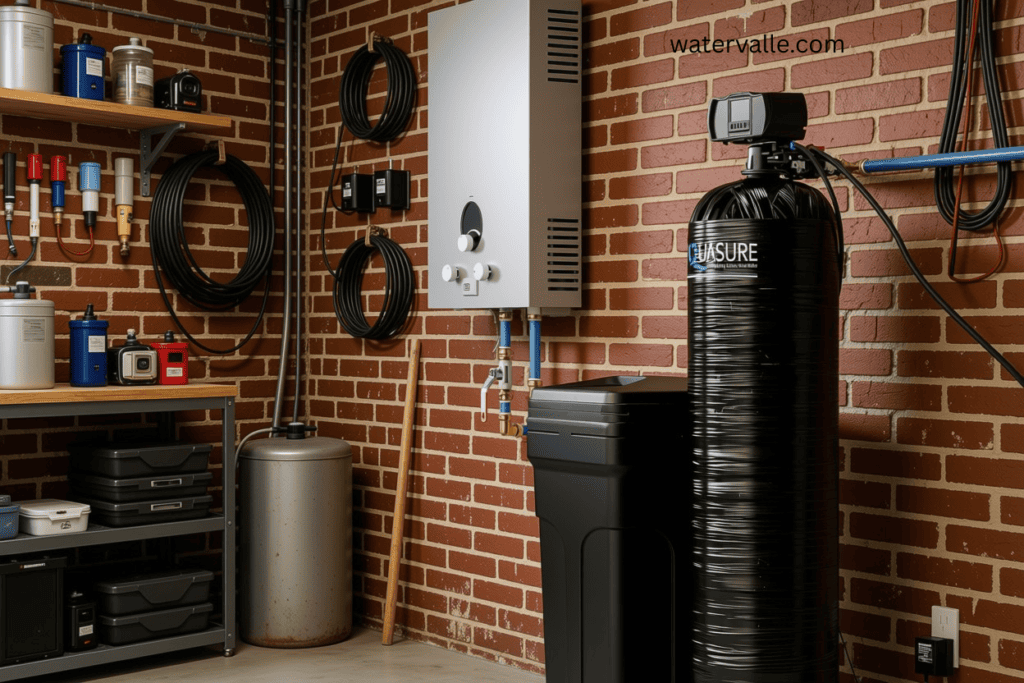
There’s an issue caused by the need for tankless water heater repair. As opposed to tank systems that have a reserve of hot water that can buy you time. The time the unit shuts down and your shower stops, it’s time to start your dishwashing and your daily routine.
There’s a good thing that the vast majority of repairs to tankless water heaters can be boiled down to a simple list of causes that can be repeated. When you’ve identified the signs to watch out for, the majority of the issues are easy DIY fixes or identified as work for an experienced technician, with little to no guesswork in between. There is also a very low requirement for emergency tankless water heater repairs if you spot the early warning signs.
How a Tankless Water Heater Actually Fails ?
A tankless water heater doesn’t have a storage tank. If you turn on the hot tap and the flow sensor is able to detect that you are moving. The appliance will ignite its flame (on gas models) or turn on heating components (on electronic models), and the heat exchanger heats the water to the desired temperature instantly at the moment you open it.
So, each time you utilize hot water, many elements must function at the same time, including the flow sensor, the ignition system, the heat exchanger, venting (on gas models), the inlet filters, and the control board, which initiates an emergency shutdown in the event of an issue. It’s not a tank that can cover up a problem when a malfunction shows on the spot, and that’s the reason tankless water heater repair can be a little more pressing in comparison to a tank.
Knowing this chain helps in the process of troubleshooting much more easily, and is the basis of any effective tankless water heater repair. The cause is almost always linked to the sign.
The Most Common Problems, and What’s Actually Causing Them
| Symptom | Likely Cause | DIY-Friendly? |
| No hot water at all | Power or gas supply off, tripped breaker, closed water valve | Yes |
| Water never gets fully hot | Mineral scale on the heat exchanger, undersized unit, “cold water sandwich” | Partially |
| Hot water cuts out mid-shower | Dirty inlet filter, flow sensor fault, too many fixtures running at once | Yes (filter) |
| Error code on display | Varies by brand — ignition, overheat, flow, or venting fault | Depends |
| Popping or rumbling sounds | Scale restricting flow through the heat exchanger | Yes |
| Won’t ignite (gas units) | Gas supply issue, dirty igniter, blocked venting, faulty flame sensor | No |
| Leaking from the unit | Loose fitting, cracked heat exchanger, pressure relief valve discharge | Partially |
| Brief cold gap between hot bursts | Normal tankless characteristic, worsened by long pipe runs | No |
Mineral scale is worthy of special attention as it is the largest driver for tankless water heater repairs across the globe, and the severity will depend on the water hardness in your area. When water is hard, scale can cover the heat exchanger over time, inducing a choke on flow, diminishing effectiveness, and even creating overheat shutdowns. If the water is soft, that same system could operate for years with no symptoms. If you’re trying to solve a persistent problem and you’re aware the water in your area is difficult, begin by decaling before assuming that the part is failing prior to booking the full-service appointment.
Reading Your Error Code
Error codes can be the most efficient method of diagnosing a problem that a tankless system provides you with — and understanding them properly is usually the initial step to tankless water heater repair. However, they’re not universal. Codes that mean “ignition failure” on one manufacturer’s device could be a different thing to another. Rinnai, Navien, Rheem, Noritz, Bosch, and Takagi each have their own systems for numbering, and firmware updates often alter what the code is referring to within the same company.
Before you contact anyone regarding repairs to your tankless water heater, make note of the codes and model numbers. Make sure you check it against the manufacturer’s official manual, not a generalized chart pulled from a different brand. One simple step will save you the time needed to diagnose and, often, the cost of a service callout for repairing a tankless water heater.
Most of the codes fit into a small number of well-known categories that are common for companies:
- Ignition error codes -Gas valve for gas supply or issues with the igniter.
- Codes for overheating usually indicate restricted flow due to scale in the heat exchanger
- Codes for flow sensors — filthy sensor or an obstructed inlet filter
- Codes for exhausting or venting -blocked, disconnected, or poorly pitched venting
- Protective freeze codes that the device’s internal freeze protection activates or is not working in frigid conditions
A Safe Troubleshooting Sequence
Be sure to go through the steps before deciding whether you require a new item or pay for your tankless water heater repair. It can resolve a number of cases of “no hot water” calls independently.
- Make sure you have fuel and power. Confirm the breaker hasn’t been triggered, and on gas models, ensure that the shutoff valve is shut.
- Verify both water valves. A partially closed outlet or inlet valve may appear to be an indication of a unit failing and cause you to believe that you require tankless water heater repair even though you do not.
- Take note of the exact error number and search it for your specific model.
- Cleanse the water inlet filter. Shut off the water supply, then remove the filter from the water intake for cold, rinse it off any water, and then replace the filter.
- Examine the venting on the gas unit to identify any obstructions or debris on the outside of the unit’s termination, and do not open or modify the internal connections by yourself.
- Descale and flush the device in the event that it wasn’t maintained in the past six to twelve months, particularly in a hard water zone.
- Set the unit in accordance with the directions of the manufacturer. Then, run a test.
If the problem isn’t resolved even after the above procedure and it’s evident that the issue is electricity, gas, or the heat exchanger, or even internal venting, it’s your indication that the assistance of a professional tankless water heater repair is truly required.
What to Leave to a Licensed Technician?
Certain tankless water heater repairs aren’t worth the effort of doing them by yourself. In most areas, they aren’t allowed to be done by yourself. This is why tankless water heater repairs go from an occasional project into a job that is licensed:
- Gas valve or gas line function in the event of fire or carbon monoxide danger
- Repair or modification to the venting system. Incorrect venting can be one of the main causes for CO-related incidents in gas tankless systems.
- The replacement of the heat exchanger is costly, precisely fitted, and is often under guarantee by the manufacturer.
- The electrical wires on the higher-voltage electric appliances
- Repairs to a device that is still covered under an active manufacturer’s warranty. Unauthorized repair often voids the remainder of the warranty.
If you’re not sure if your area requires licensing requirements for electrical or gas tasks, make sure you check with your local authority prior to doing anything that goes beyond cleaning filters or descaling, also before enlisting anyone to carry out your tankless water heater repairs on your behalf.
What Repairs Typically Cost ?
The costs for a tankless water heater repairs vary greatly by location and labor costs in the local area; therefore, consider the following as a rough and directional reference rather than an actual quote:
| Repair | Typical Range (USD equivalent) |
| Inlet filter cleaning | Free (DIY) to $75–$150 professionally |
| Professional descaling/flush | $150–$300 |
| Igniter or flame sensor replacement | $200–$450 |
| Flow sensor replacement | $150–$350 |
| Control board replacement | $300–$600 |
| Heat exchanger replacement | $600–$1,500+ |
| Gas valve replacement | $300–$600 |
| Venting repair | $200–$800 |
| Diagnostic service call | $75–$200, often credited toward the repair |
Often, the cost of repair is credited towards the cost of repair. If the machine is covered under warranty, parts may be covered even if repair work for tankless water heaters isn’t. It’s worth checking before paying anything from your own pocket.
Repair or Replace? A Practical Framework
Instead of booking a tankless water heater repairs immediately each time something fails, take a look at these guidelines:
- Repair – When the device is not more than 10 years old, it’s a one-component issue, and the tankless water heater repair price is below a third of what it would cost to replace the unit.
- Replace – Your unit if it’s over 12-15 years old and the heat exchanger is damaged, or you’ve had to repair it within the past year.
- Change and fix the root of the issue – When scale-related issues continue to occur despite maintenance routines. Incorporating a new heater with a water softener or treatment that inhibits scale will protect your investment for the future and decrease the frequency you’ll require tankless water heater repairs in the near future.
- Replace for capacity, not to repair– The real problem is the fact that your unit was insufficiently sized to handle your household’s concurrent hot water demands at the beginning.
How Climate and Water Quality Change the Picture
- Your location determines the frequency at which your system requires care, even though your fundamental mechanisms remain identical everywhere. Two factors in the environment do the bulk of the work: the hardness of water and winter temperatures.
- In areas with naturally hard water, such as with a high mineral content due to limestone-heavy groundwater, for instance, scaling develops more quickly. It covers the heat exchanger faster, which shortens the period between flushes as well as reducing the service life of internal components overall. Houses that have municipal soft water or filtered well systems are likely to experience smaller scale-related shutdowns in similar time.
- In cold climates, there is a further aspect: freezing protection. Most modern models have freezing circuits as well as heating elements to prevent the internal liquid from freezing in an extreme cold snap. However, this protection is contingent on the unit being powered and, for some models, the small amount of water being able to circulate. Power outages in the event of severe freezing are among the most common reasons for cracks in the heat exchangers of the colder areas, but it’s the most common failure scenario in warmer climates.
- The gas composition and altitude can be factors for combustion engines, as certain models need adjustment or an alternative venting arrangement when they are located at higher levels. If you’ve relocated your appliance or placed it in a different location than it was originally designed to operate at, you should confirm the manufacturer’s altitude specifications instead of assuming that a standard model will function the same way.
- Nothing changes the diagnosis process itself; this same concept of symptom-to-cause applies to everyone; however, it will affect how proactive your maintenance program must be. The household in a cold winter climate must consider the annual descaling process and a winter venting test as a must, and a home located in a soft, mild water area can usually extend that time frame without any added risk.
Finding the Right Help
If the DIY approach doesn’t fix the problem, deciding the right person to handle your tankless water heater repair is as important as the correct diagnosis. Look for a licensed plumber or gas fitter with specific tankless experience, ideally one who is manufacturer-authorized for your brand — this preserves warranty coverage that a general handyperson repair might void. Find out upfront if the charge is used towards your tankless water heater repairs in itself. Also, have the error code as well as the model number prepared prior to making the call, so that the technician is better prepared to figure out the issue from scratch.
Preventing the Next Repair
The simple routine of maintenance will do more to avoid the necessity of a tankless water heater repairs than any one fix
- Descale and flush annually, at least every six to twelve months, if you’re located in an area with hard water.
- Clean the intake filter every 3 to 6 years.
- Verify the venting termination regularly for gas appliances.
- You may want to consider a water softener and/or scale inhibitor if you notice that hardness is an issue that has been identified locally.
- Remember your model’s serial number, installation date, and your service history to hand for your tankless water heater repairs, and warranty claims can be processed faster.
Mistakes People Make During Repair
Some of the mistakes that can be avoided appear time and time again when it comes to DIY as well as professional tankless water heaters repair:
- By applying one brand’s error code chart to another model from the same manufacturer
- Inlet filter not cleaned since the solution seems “too simple” to matter
- Try to make a gas valve or venting without the proper authorization
- Making the wrong choice of descaling solution concentration or ignoring the isolation valves altogether and allowing sediment further into the system.
- Repairing a warrantyed unit via an unapproved channel will quietly invalidate the coverage that you have been counting on and affect any subsequent warranty claims.
These information are gathered from different surveys, medical tests and tech giants like google, Techradar and more. Our top priority is to provide you valuable information.
For More Details About More Water Appliances Click Here
Frequently Asked Questions
- What is the reason my tankless water heater continues to turn off?
Usually, a flow sensor problem, a blocked inlet filter, or a safety shut off triggered by an accumulation of scale that overheats the heat exchanger are the most common causes for repair of tankless water heaters.
2. What is the recommended frequency for the tankless heater to be cleaned?
Once a year in the case of most homes, and every six to twelve months if you live in a region with hard water to decrease the chance of having to call for tankless water heater repairs later.
3. How can I repair an error in a tankless water heater code on my own?
Simple ones -dirty filters or a reset, typically. Everything that involves ignition, gas, or venting must be taken to a certified technician for appropriate tankless water heater maintenance.
4. What is the reason the tankless heater is producing the sound of a rumbling or popping?
That sound almost always indicates that mineral scale is preventing the flow of water through the heat exchanger. A descaling flush will usually eliminate it, without requiring any further repairs to the tankless water heater.
5. Does it make sense to repair an old tankless heater?
Generally, yes, under around 10 years of age with a single-part problem. In the past 12-15 years, or if you have a failing heat exchanger, replacement is likely to have more financial value over ongoing repairs to a tankless water heater.
6. Do insurance policies cover tankless water heater repairs?
Typically, not for regular wear and tear or other maintenance-related issues. Some policies cover sudden and accident-related damage. It’s worthwhile to review your policy’s conditions before you decide if repair of a tankless water heater is insured.
7. How much will tankless water heater repairs cost in actual costs?
Most repairs land between $ 150 and $ 600 based on the component involved. The replacement of a complete heat exchanger will cost between $600 and $1,500 or even more.
8. What’s the distinction between fixing the gas unit versus the electric model?
Gas units have greater risk of failure points: ignition, gas valves, venting — which need a certified professional. Electric models have fewer components. However, the wiring and other problems still require the services of a licensed electrician in order to carry out a tankless water heater repair securely.
9. How do I choose a technician for tankless water heater repair?
Look for a licensed, manufacturer-authorized technician with specific tankless experience, and confirm whether the diagnostic fee is credited toward the final tankless water heater repair cost.
Conclusion
Most tankless water heater repairs are based on any of a few reasons: mineral scale, an unclean filter, a defective safety sensor, or a problem with venting. The process of repairing the power, valves, filters, along with the precise error code, can solve more problems than most people think — and the cost is just a few moments, and often avoids an expensive service visit completely.
In the event that the fix affects venting lines, gas lines, the heat exchanger, wiring, or if the appliance is still covered by warranty, the idea is to call in a certified technician instead of risking an even bigger expense or a cancelled warranty. If the unit is over a decade old and has a significant component in disrepair, you should run over the cost of replacing it before spending more money on repair of a tankless water heater.